 Skip to content
WhatsApp: (+44) 7348468531

How Is GBL Made? Industrial Production Methods Explained
Gamma butyrolactone, commonly known as GBL, is an industrial chemical used in various manufacturing processes and specialist solvent formulations. It is valued for its ability to dissolve certain materials and serve as an intermediate in chemical production. But how is GBL made, and what raw materials are used in its manufacture?
GBL is produced through industrial chemical processes involving carefully controlled reactions, catalysts and purification stages. Researchers have also investigated methods that use renewable raw materials, including compounds derived from agricultural waste.
What Raw Materials Are Used to Make GBL?
Several chemical starting materials can be used in the industrial production of GBL. The method selected depends on the manufacturing process, available raw materials, production costs and environmental considerations.
Two established industrial routes use 1,4-butanediol and maleic anhydride. Another approach investigated in scientific research uses furfural, a chemical that can be derived from plant biomass.
Each route has different chemical requirements and operational considerations. Industrial production therefore depends on specialist equipment, process controls and suitable analytical testing to ensure the resulting chemical meets the required specifications.
Traditional Industrial Methods of GBL Production
Production from 1,4-Butanediol
One established method involves 1,4-butanediol, an organic compound used in chemical manufacturing. In this process, the starting material undergoes catalytic dehydrogenation, which involves removing hydrogen during a chemical reaction.
Further chemical changes result in the formation of GBL. The process is well established in industrial chemistry, although manufacturers must manage reaction conditions, catalyst performance, energy use and product purification.
The choice of equipment and operating conditions depends on the specific industrial process being used.
Production from Maleic Anhydride
Another industrial route uses maleic anhydride, an organic compound used in the manufacture of resins, coatings and other chemical products.
In this method, maleic anhydride undergoes catalytic hydrogenation, a reaction in which hydrogen is used to transform the starting compound into other chemical products. GBL can be obtained through an appropriately designed industrial process.
Manufacturers must consider product selectivity, energy consumption, catalyst efficiency and unwanted by-products. These factors affect the economic and environmental performance of the process.
Can GBL Be Made from Renewable Materials?
Researchers have investigated ways to produce GBL from renewable resources rather than relying entirely on conventional petrochemical feedstocks.
One example is the patent CN105254599A, which describes a research method using furfural as a starting material. Furfural can be produced from biomass, including certain agricultural residues.
The proposed process involves two broad stages. First, furfural is converted into an intermediate through oxidation. The intermediate then undergoes catalytic hydrogenation to produce GBL.
This approach is significant because it explores how agricultural materials could serve as alternative sources for industrial chemicals. However, a patent describing a process does not, by itself, establish that the method is commercially competitive or widely used. Its practical value depends on factors such as production costs, yield, catalyst performance, energy requirements and waste management.
Why Is GBL Production Carefully Controlled?
GBL manufacturing requires appropriate chemical engineering controls because the reactions can involve hazardous substances, elevated temperatures, pressurised hydrogen and catalysts that require specialist handling.
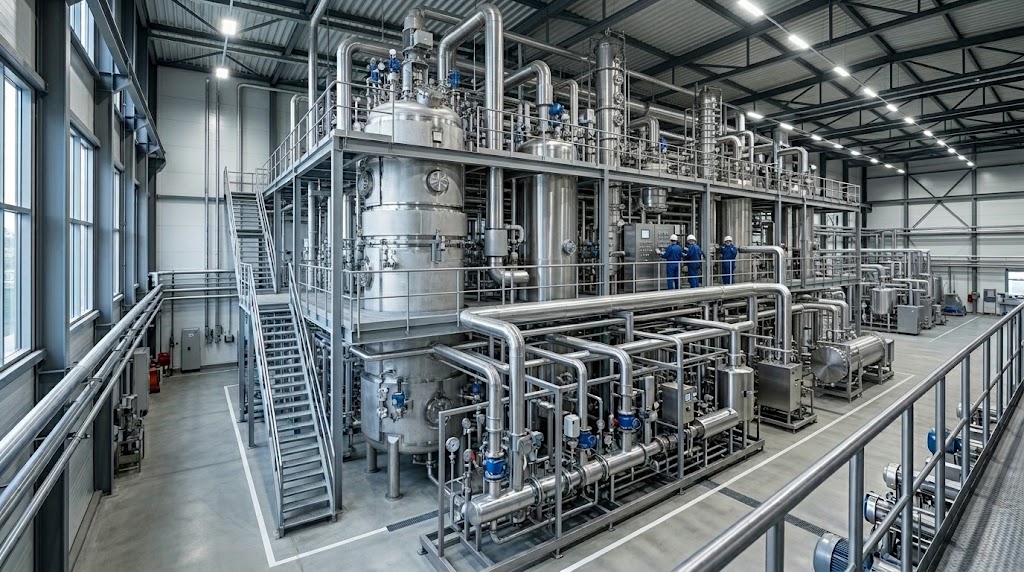
Industrial facilities use controlled production systems, suitable ventilation, protective equipment and procedures for managing chemical waste. Quality control is also important because impurities can affect the chemical’s properties and suitability for its intended industrial application.
GBL itself can pose serious health risks if swallowed. It is rapidly converted into gamma hydroxybutyrate (GHB) in the human body and can cause severe poisoning, unconsciousness, respiratory depression and death.
For these reasons, industrial manufacturing and quality assessment should be distinguished from attempts to produce or identify chemicals outside appropriate professional settings.
What Happens After GBL Is Manufactured?
Once produced, GBL may undergo purification and quality testing to confirm that it meets the specifications required for its intended industrial application.
Depending on the manufacturing process and intended use, quality assessments can examine chemical identity, purity and the presence of unwanted impurities. The finished material is then handled, stored and transported according to applicable chemical safety requirements.
The permitted uses, handling requirements and supply restrictions for GBL can vary between European countries, so businesses must check the relevant national regulations.
Conclusion
GBL is manufactured through established industrial chemical processes, including routes based on 1,4-butanediol and maleic anhydride. Research has also explored alternative production methods using furfural derived from renewable biomass.
Although these approaches differ in their raw materials and chemistry, all require appropriate process control, purification and safety measures. Understanding how GBL is manufactured provides useful insight into industrial chemistry, chemical innovation and the continuing search for more sustainable production methods.
